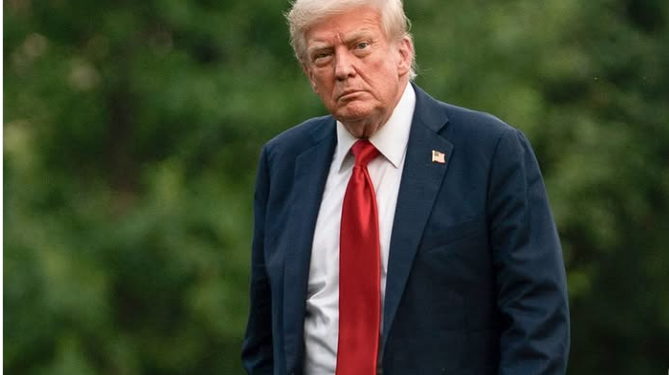
On Wednesday, May 27, 2026, President Donald Trump refiled a $10 billion defamation lawsuit in Miami federal court against The Wall Street Journal Publisher, Dow Jones, regarding a 2025 story about a lewd birthday greeting allegedly written by Trump to the sex offender Jeffery Epstein. The case comes weeks after U.S. District Judge Darrin Gayles dismissed an earlier version for failing to meet the legal standard of “actual malice.” The lawsuit names Rupert Murdoch, Dow Jones, News Corp CEO Robert Thomson, and The Wall Street Journal reporters Khadeeja Safdar and Joseph Palazzolo as defendants.
Trump’s lawyers argue that a birthday card attributed to him and released by lawmakers investigating Epstein is a forgery, and that the Journal’s reporting caused “overwhelming financial and reputational harm.” Trump’s legal team described the case as a “powerhouse lawsuit,” adding: “The President will continue to hold those who mislead the American People with Fake News and smears accountable for their actions.” In the filing, they accused the Journal of “wrongly and inextricably linking the president with sex offender Jeffrey Epstein.”
A spokesperson for Dow Jones defended the paper, saying it had “full confidence in the rigor and accuracy of its reporting” and would “vigorously defend” against Trump’s claims. Lawyers for the Journal argued in court filings: “This meritless lawsuit threatens to chill the speech of those who dare to publish content that the President does not like.”
Image Source: The Wall Journal
Background
Epstein, a financier and convicted sex offender, died in a New York jail in 2019 while awaiting trial on sextrafficking charges. His death fuelled conspiracy theories and political debate worldwide. Trump has said he cut ties with Epstein in 2006, years before Epstein’s legal troubles became public. Judge Darrin P. Gayles dismissed Trump’s first complaint in April, ruling that he had not proven “actual malice.” The U.S. legally requires that public figures must show journalists knowingly published falsehoods. The judge allowed Trump to refile, which he did on May 28.
Implications for Media Freedom
Legal analysts say the case highlights the fragile balance between press freedom and political power. In the U.S., defamation law strongly protects journalists, but repeated lawsuits by political leaders can create a chilling effect. The First Amendment shields media from government interference, yet costly lawsuits can discourage investigative reporting.
America’s legal battles often set precedents that shape press practices in other democracies, including Ghana.
The case underscores the tension between holding leaders accountable and protecting reputations. Media watchdogs warn that if powerful figures succeed in punishing outlets through litigation, it could embolden governments elsewhere to restrict critical reporting.
Wider Context
Trump has filed similar lawsuits against The New York Times, the BBC, and regional outlets. Most remain unresolved. Critics argue these suits form part of a broader campaign against the press, while Trump’s team insists they are necessary to protect his reputation.
The Miami case is still pending, with no damages awarded. Its outcome will test whether U.S. courts uphold the strong protections traditionally afforded to journalists. For countries that look to America as a model of press freedom, the ruling could carry farreaching consequences.
EDITORIAL STAFF
Reporters (Precious Baah, Frederick Ajuik, Margaret Mireku -Appiah , Florence Eshun, Mary Essoun, Mariam HammondNaadei, Justina Damoah Paddy, Rita Ayorkor)
Editor-in-chief: Nabila Priscilla
Assistant Editor: Margaret Mireku-Appiah
HR: Hilda Boaheng
About Author