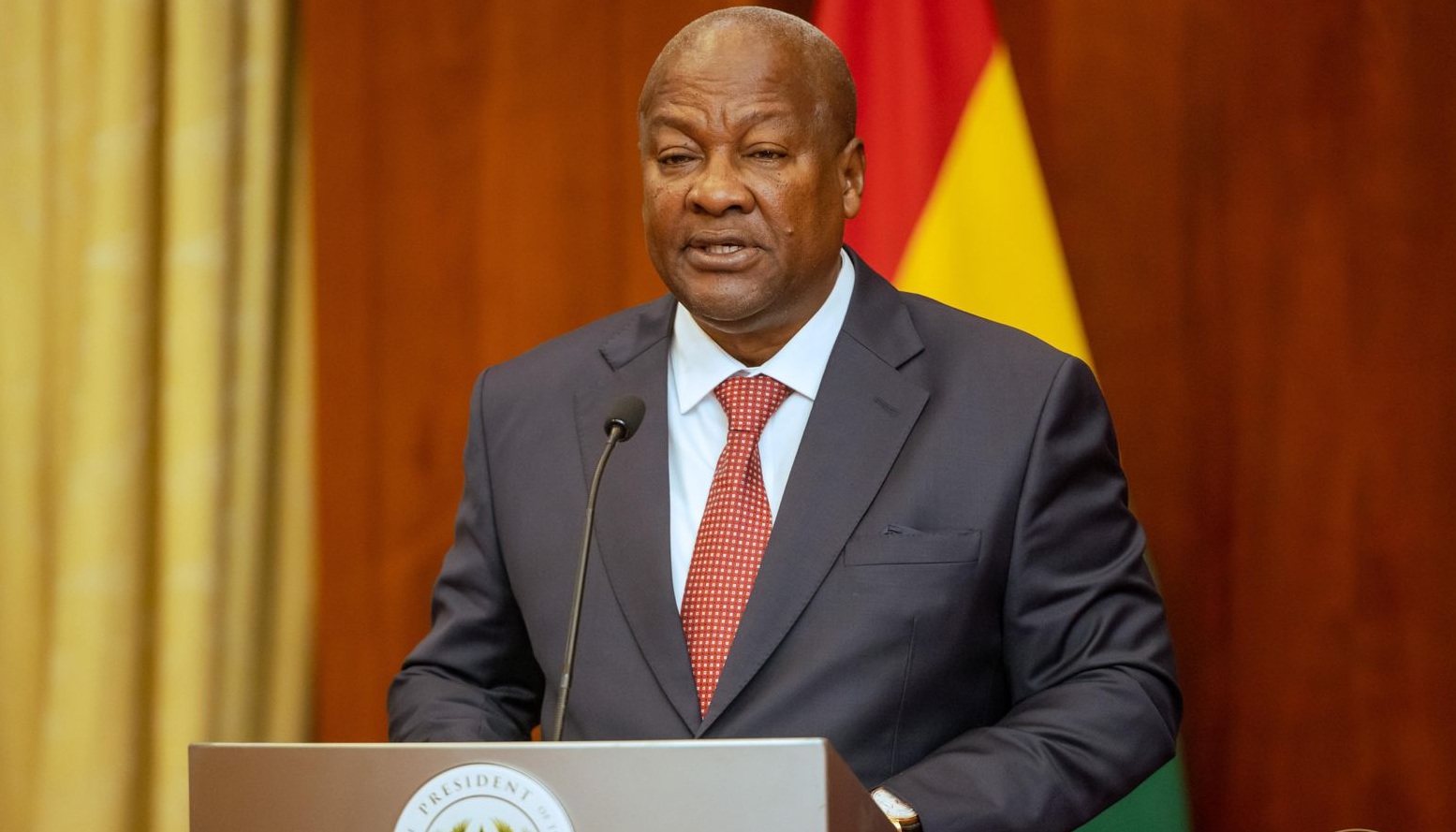
President John Dramani Mahama has announced the establishment of three global panels aimed at advancing the next phase of reparatory justice efforts, saying the initiative is intended to translate international recognition of the impact of slavery into meaningful action.
Speaking at the opening of the Next Steps Conference on Reparatory Justice in Accra on Thursday, June 18, President Mahama said the panels would provide strategic, technical and legal support to strengthen global cooperation on reparations.
The three-day conference was attended by leaders and representatives from more than 80 countries following the adoption of a landmark United Nations resolution recognizing the trans-Atlantic slave trade and the enslavement of Africans as among the gravest crimes against humanity.
Announcing the initiative, President Mahama said, “I am pleased to announce the establishment of three global panels, which will serve as the pillars of the next phase of this international effort.”
According to the President, the first body, known as the Global Advisory Panel on Reparatory Justice, will comprise heads of state and government, eminent leaders and public figures tasked with providing strategic guidance to advance international dialogue and cooperation.
He said the first is a global advisory panel on reparatory justice comprising heads of state and government, eminent leaders and public figures, who will provide strategic guidance to advance international dialogue and cooperation, President Mahama also announced the creation of a second panel dedicated to the restitution of cultural artefacts, archives and sacred objects removed from African communities during the colonial and slavery periods.
“The second is an expert panel on the restitution of cultural artefacts, which will support efforts to facilitate the return of all cultural properties, archives, sacred objects and historical treasures to their rightful communities and countries of origin”, He spoke.
He noted that the panel would support ongoing efforts to return stolen cultural heritage to the communities and countries from which they originated.
The President further disclosed that a third panel, the Global Legal Panel on Reparatory Justice, would bring together distinguished jurists and legal scholars to develop legal approaches to reparatory justice.
The third is a global legal panel on reparatory justice, which will bring together distinguished jurists and legal scholars, adding that it would help develop approaches grounded in “international law, human dignity and justice.”
President Mahama stressed that the newly established bodies are not intended to replace existing institutions but rather to complement and strengthen their efforts as the international community moves from acknowledging historical injustices to implementing concrete reparatory measures.
The President also emphasised that the panels are not intended to replace the work of governments, regional organizations or international institutions rather, they are intended to strengthen that work by providing intellectual, technical and policy support.
The announcement comes as Ghana hosts the Next Steps Conference on Reparatory Justice, bringing together world leaders, policymakers, legal experts and representatives of the African diaspora to chart pathways for addressing the enduring legacy of the trans-Atlantic slave trade.
The conference follows a historic vote at the United Nations, which urged member states to consider formal apologies and contributions to a reparations fund. The resolution was adopted with 123 votes in favour, three against and 52 abstentions.
Observers say the establishment of the three panels marks a significant step in efforts to transform global recognition of the historical injustices of slavery and colonialism into practical measures aimed at achieving justice and restitution for affected communities
EDITORIAL STAFF
Reporters (Precious Baah, Frederick Ajuik, Margaret Mireku -Appiah , Florence Eshun, Mary Essoun, Mariam Hammond Naadei, Justina Damoah Paddy, Rita Ayorkor)
Editor-in-chief: Nabila Priscilla
Assistant Editor: Margaret Mireku-Appiah
HR: Hilda Boaheng
About Author